7 | Deep Ecology
When we sense a beautiful moment in nature, what would it take to also realise that we too are this moment. It is perfect and we are perfect. No separation exists. Nothing needs to change. In a world where we are becoming more and more separate from nature - through concrete buildings, plastic packaging, dense urban settlements and of course the way in which we choose to think - it becomes more and more essential for us to dare to open to more expansive ways of being.
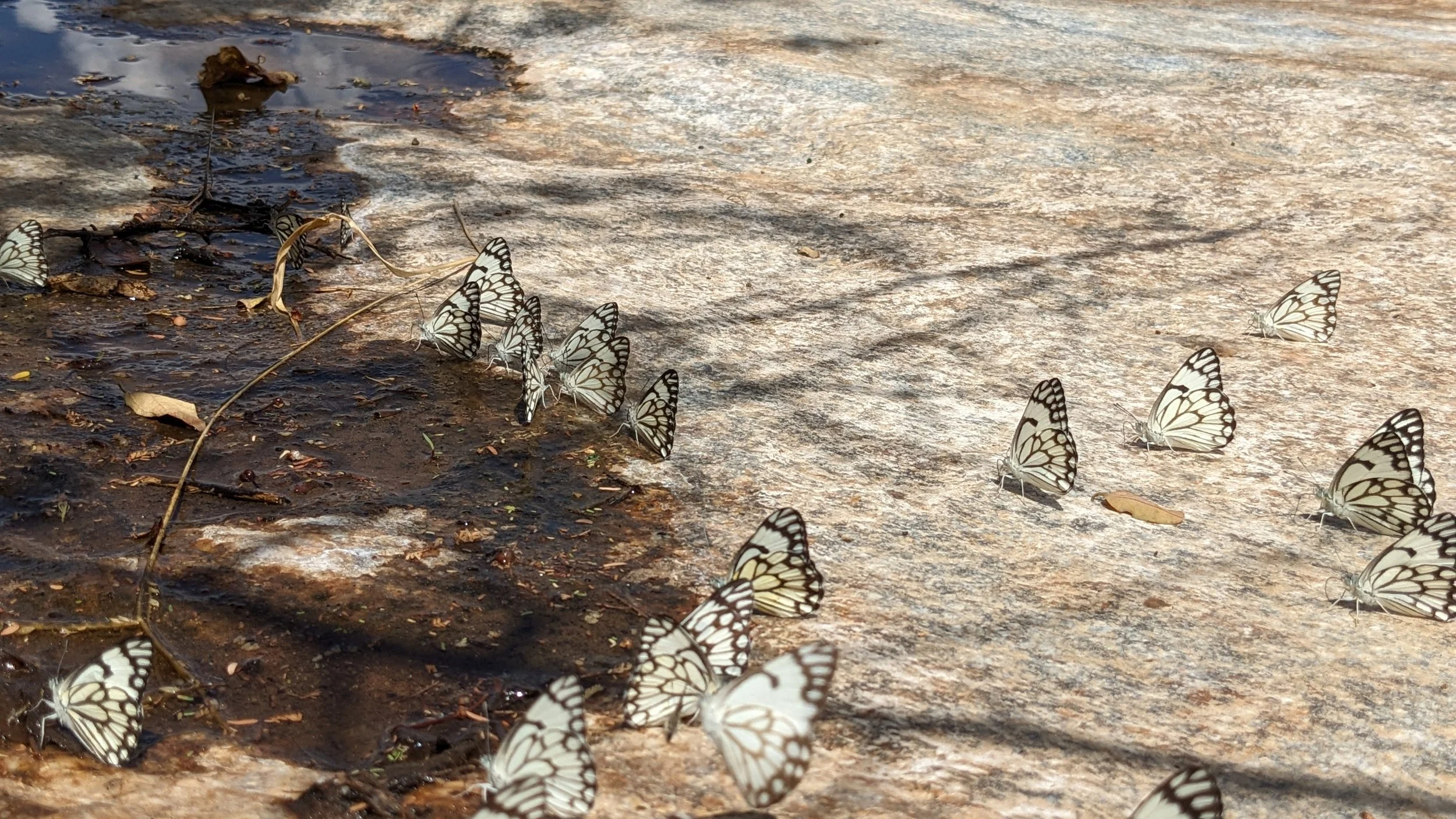
These are the sorts of ponderings that flood my mind as frequently as a butterfly takes to nectar. They flutter in and out with the same beauty and magnitude as the butterfly moves. Gentle yet attention catching. With motion and the occasional deep rest. The struggle I often have is how to move things from theory into practice. From thinking into feeling. I can digest book after book, podcast after podcast but until I sense this inherent oneness that the mystics describe it remains abstract and without warmth. Even as I’ve experienced mind-altering encounters - whether that is with the accompaniment of music, the solitude of an altar or the companionship of plants - the echoes do not last forever. It doesn't take long for the chaos of modernity to move me back into a mindset of me and mine; from there it has to become a daily intentional act to sense into collaboration and interconnection…to remember. And the remembrance often comes from the mind rather than an inherent feeling inside me.
This feeling where we experience “ourselves as part of the living planet (Gaia) and finding our role in protecting the earth and its life….the relationship is more of an involved participation of one who feels connected with as well as part of the world and surrounding self” (from A Manual for Buddhism and Deep Ecology) is coined as deep ecology. It is an act of widening circles as Buddhist scholar and ecologist, Joanna Macy would say. An act of daring to drop this sense of separation, of self, and sense into our true nature as the stars. All we really are is the elements. Shared elements. In every speck of dust is stars. But it can be hard (and feel a little craaaaaazy) to walk through life believing and sensing we are stars, stardust, the universe in verse. Once, a man actually had the courage to introduce himself as ‘I am stardust’ and I admit at the time I rolled my eyes, but needless to say, it has stayed with me as a contemplation.
Imagine if we trusted that.
If we walked through life aligned to our true nature, our deepest values and our enthusiasm.
Perhaps we would give out the same luminosity as the stars… I am sure you have met people like this. They seem to move with a gentle glow, an unshakable inner peace, a sense of belonging.
“When we try to pick out anything by itself, we see it hitched to everything else in the universe” ~ John Muir (My first summer in the Sierra)
And that is all deep ecology really is. Returning to a deeper belonging. A belonging to the earth rather than a force dominating over her. Ancient wisdom has long known this. In Buddhism they call it dependent origination, or ‘interbeing’. To be is to inter-be. We belong to everything else that surrounds us, we are because everything else is. We are never alone, we always belong to something far more mystical than we can ever make sense of… This is what we are always participating in as we traverse life. And so, it becomes clear that the way we think and the way we act matters. Our actions have ripple effects upon everyone and everything else. If we dominate and overutilise the earth we are dominating and overutilising ourselves. Rather than controlling nature, the question evolves into how can we participate artfully within this living system we are part of? The fact that common society does not tend to live by this question could be part of the reason that we are getting sicker as a society, that auto-immune diseases are on the rise. Our sickness and the earth’s sickness are intertwined.
If we can grasp that we have immune systems and that these are becoming increasingly stressed then why does it come as such a surprise that the earth also has an immune system? She too is alive. She struggles day in and day out to be resilient to the parasite that is human-kind (do we still deserve that labelling?), without asking for recognition, just humbly hoping that we might one day wake up and care for her in return.
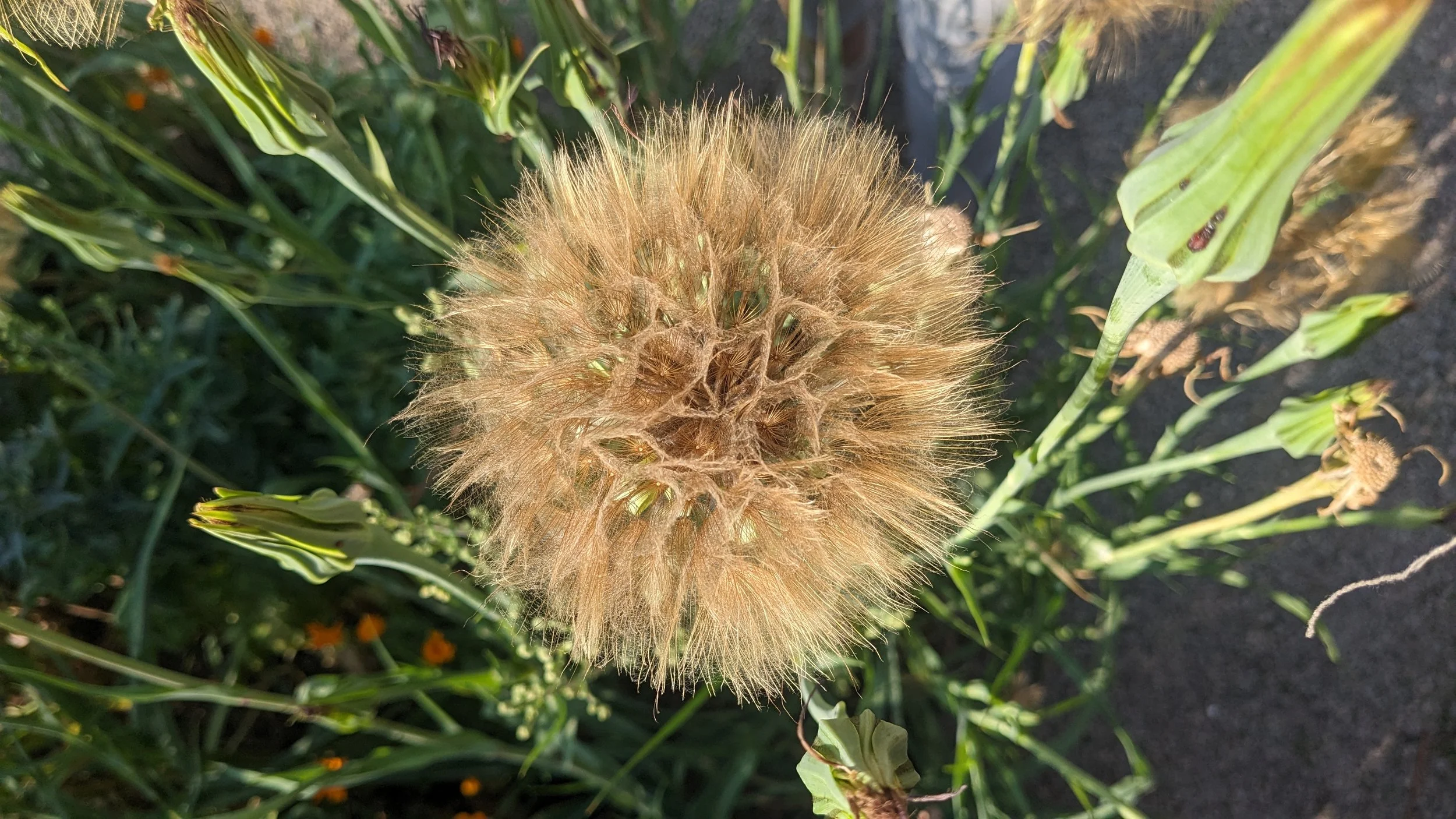
Last summer at Groundswell I heard the incredible land whisperer Patrick MacManaway share his contemplations about how the single missing conversation in the space of regenerative work is indeed the conversation with the land itself. He insists, like many mystics and spiritual traditions, that the world is love and light, composed of elements and alive with consciousness. Could it be that she hears when we do not share our blessings and gratitude with her? Could it be that she senses when we take without reciprocity or gratitude? We think we just walk on the earth, but really the earth is endlessly giving us permission to walk on her. When we look at the environmental state of today, it does pose the question - has she had enough? Has she met her edge? Is she pleading for us to cross this threshold with a new way of being and relating?
It strikes me that life is always a conversation of thresholds. The intensity of these moments are often overwhelming, causing us to retreat, to pull back, to protect. We are again at the mercy of a limbic system so primed to find safety in the face of discomfort. Yet what if, in that moment of resistance, when we feel in body and mind that we are on the edge, we are able to approach it with greater curiosity and faith? The late Irish philosopher and poet, John O’donohue, so abundantly urges us to look at these moments as a moment of renewal, a moment where we can change our story and courageously let go into the ambiguity and vitality of change:
“Within the grip of winter, it is almost impossible to imagine the spring. The gray perished landscape is shorn of colour. Only bleakness meets the eye; everything seems severe and edged. Winter is the oldest season; it has some quality of the absolute. Yet beneath the surface of winter, the miracle of spring is already in preparation; the cold is relenting; seeds are wakening up. Colours are beginning to imagine how they will return. Then, imperceptibly, somewhere one bud opens and the symphony of renewal is no longer reversible. From the black heart of winter a miraculous, breathing plenitude of colour emerges.” ~ John O’Dononhue (The Space Between Us)
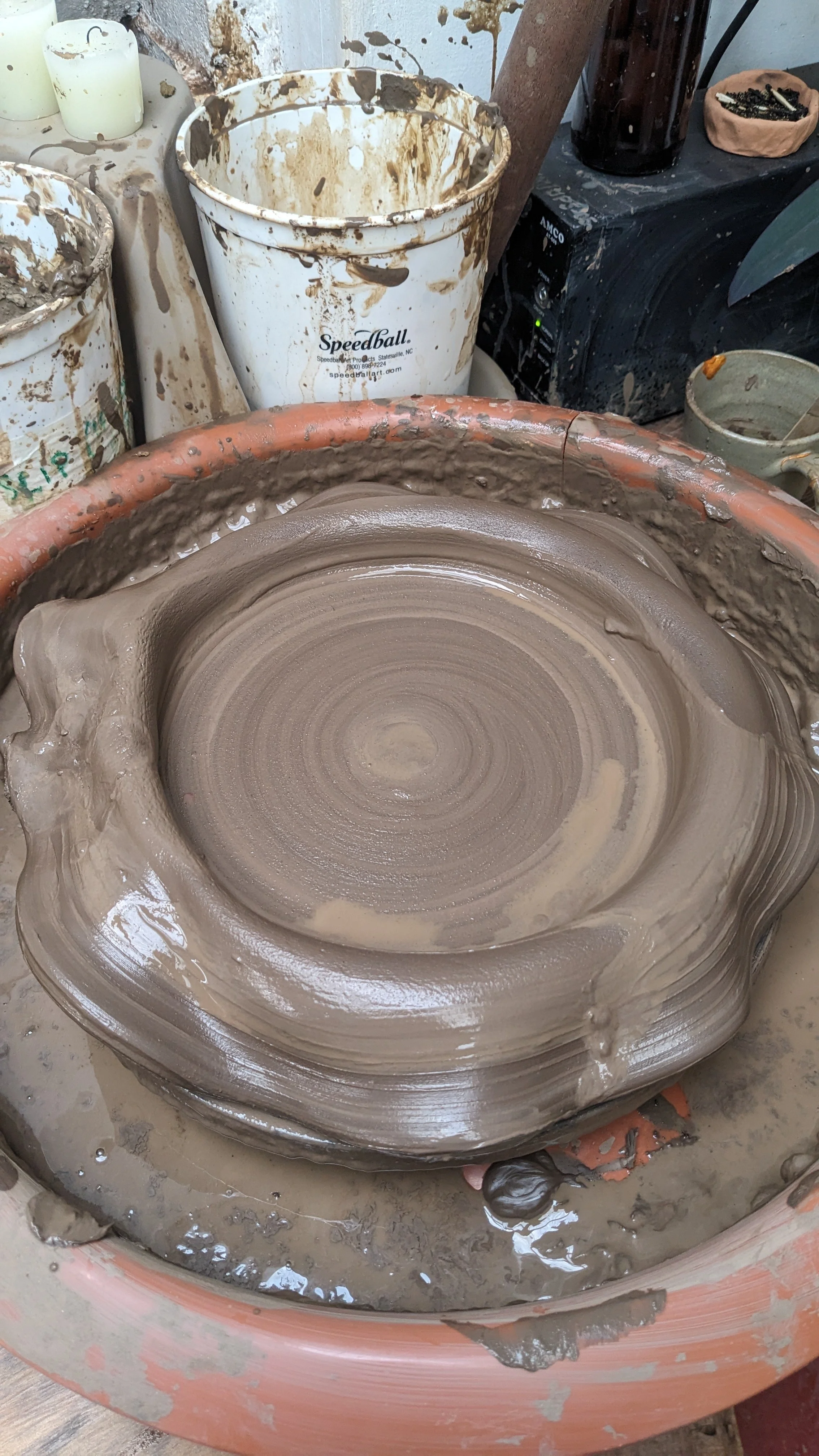
When I’m at the pottery wheel and my creation looks on the brink of collapse, I can either let it happen, returning to the same starting point, or I can pause, step back, slow down the wheel and surrender to whatever new shape she is asking to become. It is always a surprise, I’ve had to relinquish all control of what I think I want the piece to become and instead listen to what is actually before me. Amidst the disappointment or frustration of things being different to what I stepped out for them to be, I also notice a quieter fragrance of relief. Life isn’t all me, is it?
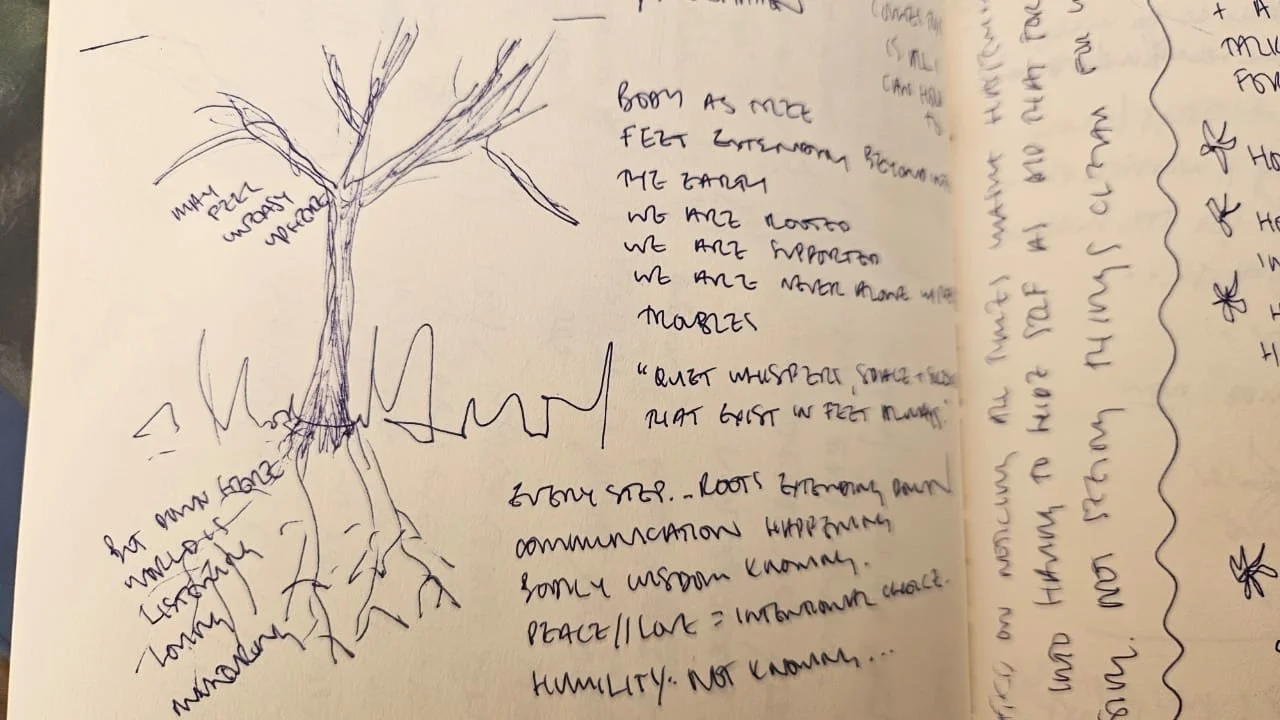
And this is again what deep ecology teaches us. It teaches us that we are an insignificant yet magnificent act of chance. That we are always deeply held and supported by the earth. I felt this insight very deeply during a focussing session late last year. Sitting in the abundance of a suburban Nairobi garden, monkeys foraging overhead and guava trees providing delicate shade, I explored why I was feeling such deep pain and loss around not feeling a sense of witnessing, support and curiosity into my feelings and interests from someone whom I quietly loved. I realised I was holding expectations for them to show up differently to how they either wanted to be or were able to be. Was the question of ‘how is your health’ or ‘what's alive for you’ or ‘what are you exploring in your studies’ really too much to long for? Why did it matter so much to me? I felt underresourced, at my edge and overwhelmed from months of paying attention to this absence of care and with this increasingly feeling like a thinner, less radiant version of myself.
Yet as I took curiosity into these feelings and where they existed in my body, I noticed that the one place within me that felt deeply held, supported and resourced was my feet. My bare feet, entangled with the grass and warmed by the red soil beneath them. I may feel uneasy in my heart and in my head but down here the world is listening, the world is supporting me no matter what. To sense into this endless reservoir of support that the earth gives me - not least the oxygen that settles and ignites me - was profoundly shifting. Now I realise that when I am at my edge, it is nature who I can turn to, nature who will listen, nature who witnesses me. If only I had known that in childhood, or maybe I did? Maybe that is why I was so often out there, up that tree, talking to myself, weeping to myself, all alone…
New hope, courage and new possibility can arise from the reality of our shared entanglement with the web of life. It is a choice to see with these eyes, to see past what we have been conditioned to believe. As Fritjof Capra says, “To regain our full humanity, we have to regain our experience of connectedness with the entire web of life”. Is this the great question of our time?
How can we achieve a phase transition away from our dominant culture towards a worldview that is, indeed “life affirming, based on the deep recognition of humanity's interrelatedness with the living earth” ~ Jeremy Lent (The Web of Meaning).
What would it take for you to believe this is possible?
What wonder do you imagine might emerge as you set forth with this new (old) culture?
How would you feel?
What would you do?
Whoe would you be?
With peace, Tash x
——————————
What’s been sparking my curiosity?
Hearing: the last meditation on this series of videos ‘Everything is Everything’ is utterly profound. Martin guides us to sense into our shared existence, resting in the peacefulness of presence and love.
Seeing: with new eyes. I can slowly sense myself returning to presence after about four painful months of being a prisoner to my fear and unease. Mind contracted. Body at its edge. Sense of rootedness in self, and in the world utterly disturbed. I’ve learnt an important life lesson on how a perceived lack of safety causes havoc if not met with mindfulness and compassion.
Tasting: freshly baked banana bread (crafted with amaranth, sweet chestnut and rice flour), lathered with coconut and cashew butter, miso and cinnamon. Earthy dense flavours with a lightness in its dance, delighting and grounding.
Smelling: the calming fragrance of lavender oil on soft pillows before sleep. An invitation for my mind and body to rest, a transportation away from whatever has been into this present moment.
Touching: my body. Hands resting on heart and belly, feeling into vibrations and subtle movements. Gently hugging myself when feeling activated. Remembering what is true, what is here right now, and what is a story of the mind, of memory, of illusion.
Feeling: a tension between compassion and hurt. Realising more and more that it is a choice on whether to feel compassion or pain and anger. That when I feel harmed by the action of another, there is a reason for why this behaviour is presenting. And whilst the pain is real and the impact is felt, there is always a choice whether to react and let that story become personal or to breathe with the suffering, their suffering and mine…with the person or situation…and gently return to compassion for them, for me. Allowing the anger, pain, sadness to be felt and then transformed. Never closing the heart, simply seeing the sorrow as soil from which seeds of personal growth can flourish. Ever a practice…
“Sorrow prepares you for joy. It violently sweeps everything out of your house, so that new joy can find space to enter. It shakes the yellow leaves from the bough of your heart, so that fresh, green leaves can grow in their place. It pulls up the rotten roots, so that new roots hidden beneath have room to grow. Whatever sorrow shakes from your heart, far better things will take their place.” ~ Rumi